
Interesting fish situation

Brian Renville

Founding Member
Founding Member
Joined
Apr 14, 2015
Posts
4,145
Likes
73
Points
308
Location
Fairview, MT
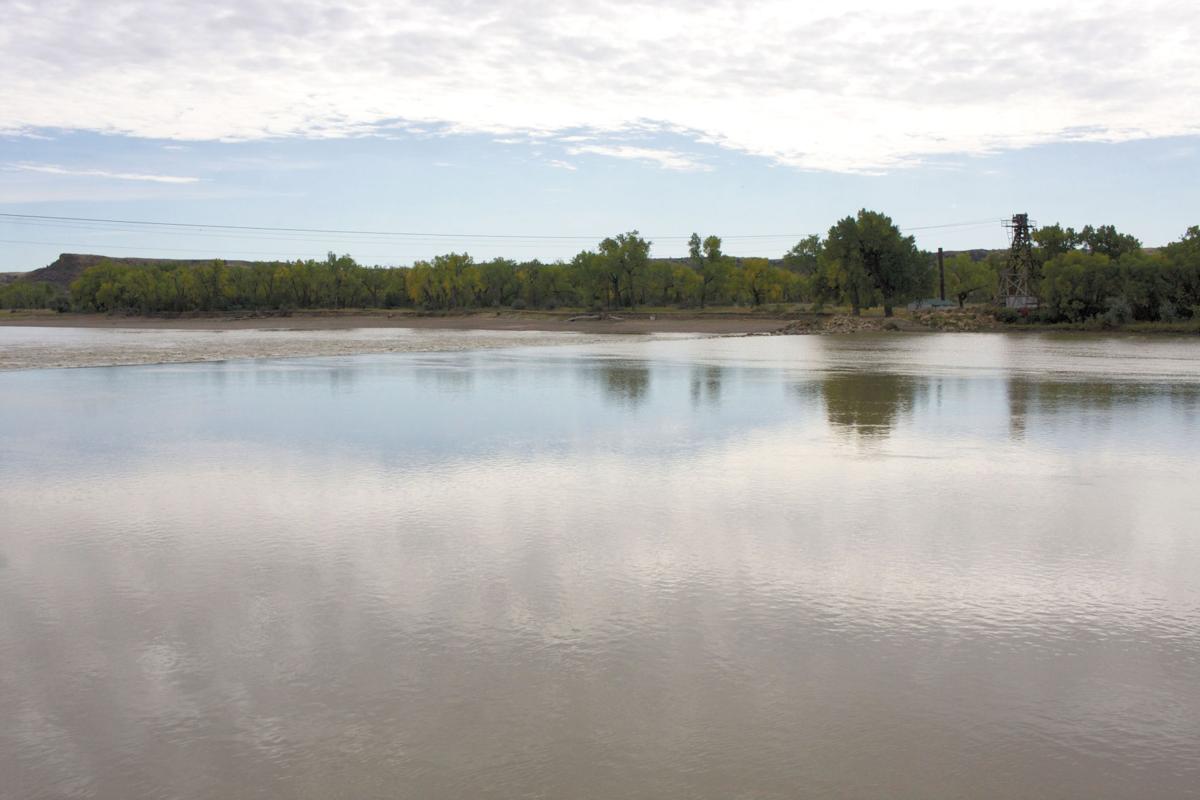
The Yellowstone is considered to be the longest undammed river in the US an most people on the surface would say that it should stay that way, however the current intake diversion could just as well be Hoover Dam if you are a fish. Now this new project creates a bypass that would at least give fish a chance to move back and forth but the idea of a dam has got the tree huggers in full lunatic mode. I figure any chance to keep the fish population and migration healthier the better things will be for the system including Lake Sakakawea.

Court battle
[h=1]County submits declaration in support of irrigation project[/h]
  • By Bill Vander Weele Sidney Herald
  • Aug 9, 2015
  • Comments


prev
next


In a rare action, the Richland County commissioners have issued a declaration for the injunction hearing in Great Falls Wednesday involving the Lower Yellowstone Irrigation Project.

Richland County Commissioner Loren Young said it was the first time that county attorney Mike Weber has prepared a declaration of this matter.

The injunction, filed by the Defenders of Wildlife and the Natural Resource Defense Council, would, if successful, prevent the LYIP from beginning construction on the new concrete weir and fish bypass until the entire lawsuit has been settled. However, critical federal funding through the Army Corps of Engineers expires if it has not been used by September of this year.


Although he doesn’t expect to be allowed to testify, Commissioner Shane Gorder will attend the hearing to display the commissioners’ support.

Information in the declaration from the commissioners includes the following:

• “The Lower Yellowstone Irrigation Project is depended upon to provide water to some 55,000 acres of food crops, while supporting the economy in several communities in Richland County.”

• “The loss of irrigation would make most private irrigated farms, Sidney Sugars Inc., Busch Ag Resources and several other local businesses unviable causing harm to the economic stability of Richland County.”

• “The Endangered Species Act requires that everything (including the stopping of the necessary rocking, or even removal of the existing dam) be done to try to save the pallid sturgeon and other endangered species of the Yellowstone River.”


• “A proposed agreement between LYIP, the Bureau of Reclamation, the Corps of Engineers, and the U.S. Fish, Wildlife and Parks provides a resolution which will require the construction of a concrete weir and durable fish passage, which will continue to supply reliable water to the irrigators of the LYIP system in Richland County, protect the endangered species and improve accessibility for water enthusiasts.”

• “Richland County, Montana, supports the proposed agreement between the Lower Yellowstone Irrigation Project, the Bureau of Reclamation, the Corps of Engineers and the U.S. Fish, Wildlife and Parks, providing for the construction of a concrete weir and durable fish passage at the Intake Diversion Dam.”


Brian Renville

Founding Member
Founding Member
Thread starter
Joined
Apr 14, 2015
Posts
4,145
Likes
73
Points
308
Location
Fairview, MT
These clowns arent going to stop here.

[h=1]New Intake motion takes a shot at Fort Peck, too[/h][h=2]Federal agencies have been violating ESA for 27 years with both dams, Defenders of Wildlife claims[/h]


5a6bd0d635c3a.image.jpg


[FONT=&quot]The Glendive Intake Diversion Dam is not what people typically think of when they picture a dam. It doesn't tower over the water. It is a submerged weir whose purpose is to elevate the water level, diverting some of the Yellowstone River into canals that serve the Lower Yellowstone Irrigation Project. It is a congressionally authorized project serving the MonDak for more than 100 years.
Renée Jean • Williston Herald


The continued operation of both the Fort Peck Dam and the Glendive Intake Diversion Dam are violations of the Endangered Species Act, according to the latest motion from Defenders of Wildlife, and neither can be allowed to continue operating as is.

Further, The group contends both dams have been operating illegally for 27 years with the knowledge of federal agencies, which abrogates their usual immunity and puts them at risk of future prosecution.

The Fort Peck allegation is a new twist in the environmental group’s case against the Lower Yellowstone Irrigation Project’s submerged weir near Glendive and a $57 million project that was to make it more fish friendly. The contention appears in a motion Defenders filed late in December that asks the court for summary judgement and declaratory relief against both dams.


A hearing for the new motion is set for 1:30 p.m. April 19 in Great Falls. The motion is separate from an appeal in Portland, Oregon, set for March 5, in which LYIP and federal agencies are asking a higher court to set aside a temporary injunction that has stopped construction of a fish bypass channel for the second time.

James Brower, Lower Yellowstone Irrigation Project Manager, said it is probably more imperative than ever for members of the communities served by LYIP to attend the Great Falls hearing this time. LYIP delivers water to 58,000 acres of cropland, of which 18,000 are in North Dakota and the rest in Montana.

“it’s very important for the judge to have to look into the eyes of Sidney-area and LYIP-area residents while he’s making decisions on the plaintiff’s allegations,” Brower said.

In the motion, Defenders contend that federal agencies have known for 27 years that operations of both dams are taking the lives of pallid sturgeon, and that they have failed in that time to implement a lawful solution despite knowing that.

In the case of Fort Peck, the agencies had determined that flows from the dam are too low and too cold to provide the spawning cue that pallid sturgeon need. That has led them to migrate up the Yellowstone, where they run into another obstacle, the submerged weir at Glendive.

Neither of the river branches presently allows enough drift distance for the pallid sturgeon larvae to survive Lake Sakakawea, which lacks oxygen at the entrance to its system. Consequently, pallid sturgeons haven’t been recruiting since the 1950s, when Lake Sakakawea was built. Recruitment refers not just to spawning of larvae, but getting to juvenile stages.

Pallid sturgeon were listed as endangered in 1990, and agencies have been working on a solution ever since.

In 2000, the U.S. Fish and Wildlife Service issued an opinion that concluded the U.S. Army Corps of Engineers’ Missouri River operations, including those at Fort Peck, were likely to jeopardize and incidentally take pallid sturgeon by preventing them from successfully reproducing in the wild.

A subsequent biological opinion in 2003 laid out several Reasonable and Prudent Alternatives, or RPAs, for Fort Peck, including modifying flows in spring to cue spawning, releasing warm water both to cue spawning and boost larval development, and unbalancing reservoir levels to allow high flow releases in the spring on a rotating basis among the three reservoirs.

Those RPAs have never been carried out, Defenders of Wildlife contends. Instead, the agencies focused on a fish passage project for the intake that the environmental group says will make the situation worse for pallid sturgeon.

“Federal defendants have staked the future of the species on an artificial bypass channel that may not pass any sturgeon at all, let alone restore their ability to reproduce in the wild,” Defenders write in their motion. “Gambling the pallid sturgeon’s existence on unfounded speculation that the bypass channel will work places the entire risk of uncertainty on the species, a risk that cannot be reconciled with the ESA’s explicit mandate to ensure against jeopardizing the species’ survival and recovery.”

The group points out that the court has already granted two preliminary injunctions against the project, and concluded that Defenders is likely to succeed on the merits of their challenges.

“The court should set aside the approvals for the Intake project, and set expeditious deadlines for the agencies to bring their ongoing unlawful operations into compliance with the Endangered Species Act,” Defenders write in their motion. And that includes Fort Peck as well, the group said.

The group also pointed out a Supreme Court ruling which held that federal agencies ignore a biological opinion and pursue their own course of action at their own peril and that of their employees.

“Anyone who knowingly takes an endangered or threatened species is subject to substantial civil and criminal penalties, including imprisonment,” the motion states.


Defenders conclude their motion by requesting the court vacate the 2016 biological opinion, Environmental Impact Statement and the Clean Water Act analysis used to approve the Intake project.

And, while acknowledging the usual schedule following such a decision would require new consultations that would be completed within 135 to 315 days, depending on how much construction is involved, the group said a more expeditious timeline would be warranted here.

“The Corps and Reclamation have already spent significant resources developing alternatives, including the multi-pump alternative that would provide full river passage for pallid sturgeon,” the group wrote.

Defenders have been advocating for an open river solution from the outset of the case, suggesting pumping stations would be able to bring water to the 58,000 acres of cropland in North Dakota and Montana as efficiently as the submerged dam near Glendive has done for the past 105 years.

Brower has said previously that the annual maintenance of such pumps would be too costly for area farmers to maintain. The U.S. Army Corps of Engineers estimated that to be around $5 million annually. That would mean the death of the irrigation system, which has not only bolstered farming. It’s also fed the watershed of the surrounding community for more than a century, and created riparian habitats that did not exist before.

Brower has also pointed out that pumping stations would have some environmental downsides of their own, which he said was pointed out in one of the Environmental Impact Statement’s many appendices.

These would include rip-rap for shorelines, which tends to deepen a river channel and make it flow faster, and at least annual dredging. Both would have an effect on aquatic populations in the Yellowstone.

Noise from the pumps could also affect the northern long-eared bat, which is listed as a threatened species. It uses sonar to navigate and gets lost in a noisy environment.


[/FONT]
 

dean nelson

Founding Member
Founding Member
Joined
Jul 17, 2015
Posts
8,270
Likes
67
Points
308
Location
Bismarck
You do realize the tree huggers option is by far better then the half ass fish bypass that's proposed for the fish in Sakakawea. I would definitely like to see what pumps take five million a year in up keep to get water into those channels. I for one don't give a shit what they do out there but to blast them well using the same logic they are building there point around seems a bit odd.
 
Last edited:

Allen

Founding Member
Founding Member
Joined
Apr 24, 2015
Posts
11,558
Likes
2,962
Points
783
Location
Lincoln, kinda...
Dean, and what pray tell, is the half assed fish bypass proposed for Sakakawea? I haven't heard of that one.
 

Brian Renville

Founding Member
Founding Member
Thread starter
Joined
Apr 14, 2015
Posts
4,145
Likes
73
Points
308
Location
Fairview, MT
Sakakawea? Huh? You do realize these same tree huggers you claim have such a great idea have a longer term plan to remove every dam they find? These clowns get paid to bring shit like this to court over and over. They don’t care about possible solutions or even logic all they know is they are making a living claiming to save animals. They are spending years fighting a possible solution that costs them nothing to try. They’ve already acknowledged that Sakakawea is a problem for sturgeon so there is no reason to think once they get rid of intake they will just say the rest of the dams in the system are just fine.


dean nelson

Founding Member
Founding Member
Joined
Jul 17, 2015
Posts
8,270
Likes
67
Points
308
Location
Bismarck
Dean, and what pray tell, is the half assed fish bypass proposed for Sakakawea? I haven't heard of that one.
Go back and reread his lead in paragraph specifically the last sentence of it! We're not talking a fish bypass for Garrison Dam were talking a fish bypass for the fish that are in Lake Sakakawea trying to move up the Yellowstone!

- - - Updated - - -

Sakakawea? Huh? You do realize these same tree huggers you claim have such a great idea have a longer term plan to remove every dam they find? These clowns get paid to bring shit like this to court over and over. They don’t care about possible solutions or even logic all they know is they are making a living claiming to save animals. They are spending years fighting a possible solution that costs them nothing to try. They’ve already acknowledged that Sakakawea is a problem for sturgeon so there is no reason to think once they get rid of intake they will just say the rest of the dams in the system are just fine.

Of course they want to do that but considering they keep tens of billions if not approaching trillions of dollars of infrastructure relatively safe the hippies have a snowball's chance in hell of ever even getting close to getting a meeting on that let alone getting them removed. We are talking a small lowhead dam that some fish seem to have issues with and the bypass by most accounts is likely half ass at best. On the big damns they can try and put a fish bypass in that would be one hell of interesting albeit idiotic way to spend US taxpayer dollars but rest assured the damns will stay. Hell I can't even get a win versus a tiny little low-head let alone the big dogs.
 

SDMF

Founding Member
Founding Member
Joined
Apr 24, 2015
Posts
11,464
Likes
1,462
Points
588
I don't understand why the folks who are so against any kind of electrical power generation don't just go live off-grid? Why do I have to do without just because they don't like it? I like lights, heat, and hot water to be available to me on a whim for mere pennies.

What happened to survival of the fittest anyway?

The water-manipulating Chinese, Japanese, Egyptians, Myans, and Azteks woulda sent these nay-sayers packing into the barren desert. Could be one of these ancient civilizations originally coined the phrase "Waterhead" and pinned it on these folks.

We must have enough brood-stock of pretty much every species of fish to keep a viable population stocked into nearly any/every body of water they're supposed to be present in.
 
Last edited:

JayKay

Founding Member
Founding Member
Joined
Apr 20, 2015
Posts
6,736
Likes
463
Points
358
Location
Southeast Bismarck
I was not around prior to Garrison Dam being built, but not only do I enjoy having the lights come on when I flip the switch - I also enjoy my home in south Bismarck, which would be highly impossible if not for the dam.

Not to say, we have (I'm using loose numbers here) 9 bajillion fish to stock anyhow. Could it be cheaper to remove, for instance, Garrison Dam (can't imagine what that alone would cost) and then have yearly floods (can't imagine what that would cost) versus just stock the darned fish above and below the dam?

I realize that we're not necessarily talking about Garrison Dam, but talking about the tree-huggers and other various "crunchy" people being against anything man-made put into the wilderness.

I know I'm preaching to the choir here. I kinda actually think, for once, that I'm agreeing with Dean.

And yes, SDMF, you nailed it, when you say "survival of the fittest".

My 2 cents...
 

Brian Renville

Founding Member
Founding Member
Thread starter
Joined
Apr 14, 2015
Posts
4,145
Likes
73
Points
308
Location
Fairview, MT
Another problem is if these guys get a court to say the diversion needs to go that sets a precedent for the sturgeon. We need to realize there is no proof that the extra time the sturgeon larvae would get before they hit the start of Sakakawea, which they claim is death for them, will do them any good at all. Do we honestly think that, let's say 2 weeks, of extra drifting is the magic number to allow these things to survive? It really is a shot in the dark at this point. Is blowing up the entire dam that 58,000 acres of farmland depend on a better option for something we have no idea would work than giving the bypass(that has already been started) a shot to see how and if it is getting used. If it's not getting used we'd know in a year or two. The other option will likely take a decade or more to even try and get results. Not to mention pallids are being stocked every year now. If fish do indeed use the bypass I think it may free up quite a bit of spawning ground for game fish as well, a natural reproduction boost for walleyes nd saugers in Sakakawea could be huge. As well as paddlefish. I'm not saying it would for sure happen but it definitely couldn't hurt.
 

Brian Renville

Founding Member
Founding Member
Thread starter
Joined
Apr 14, 2015
Posts
4,145
Likes
73
Points
308
Location
Fairview, MT


Recent Posts

Friends of NDA

Top Posters of the Month

  • This month: 142
  • This month: 43
  • This month: 37
  • This month: 35
  • This month: 25
  • This month: 22
  • This month: 21
  • This month: 21
  • This month: 16
  • This month: 15
Top Bottom