There off

db-2

★★★★★ Legendary Member
Joined
Sep 28, 2016
Posts
4,155
Likes
1,330
Points
493
Location
ND
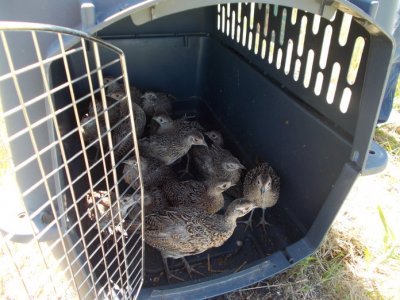
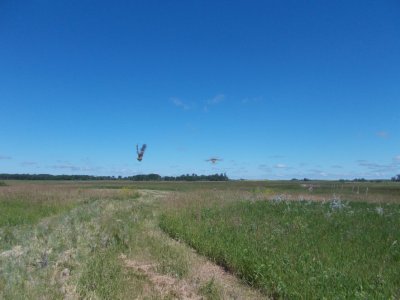
DSCN8522.jpgDSCN8526.jpg First year for my son. Bought 300 birds and started the release. Told maybe 25% make it the first two weeks. A few different spots. Neighbor already call as he seen some pheasant.
Son stated to him hopefully they all make it till next year to breed.
Hope he understands what that means.
Learn a lot for next year to do different. Been told the main concern is cover and feed for the winter so we will work on that and any help from anyone on that would be appreciated. My father told me as a young kid that their straw piles from the threshers were a great place for the birds to live and survive. We do look forward to being able to watch as we sit in the stand for deer. Hopefully that happens. thanks in advance. db


Big Iron

Founding Member
Founding Member
Joined
Nov 2, 2015
Posts
756
Likes
39
Points
226
I've always wanted to raise/release pheasants. Hope those little buggers have some good instincts and survive.
 

gst

Banned
Founding Member
Founding Member
Joined
Apr 23, 2015
Posts
7,654
Likes
122
Points
308
Thumbs Up

Have been doing this for a few years now. One bit of advice I would share is we found better survival rates when we started releasing more birds in fewer areas.

We we started out turning loose 300 birds in 10 or 12 areas, now we basically split 200 birds into two areas with good habitat they are starting to spread out on their own to the other areas.

This is the first year in several that we saw birds digging down into the straw we put out for cattle in the winter. Wakes you up when checking cows at 2:00 AM.......Hopefully some of the wild instinct is returning after a few years.
 

PrairieGhost

Founding Member
Founding Member
Joined
May 15, 2015
Posts
10,785
Likes
1,538
Points
678
Location
Drifting the high plains
If a little extra expense is acceptable a soft release may work better. The idea is to pen and feed them in the area you will release them. Then don't push them all out at once. Leave an opening where they can escape individually. They will walk away and stay grouped rather than fly a half mile each in a different direction. Releases of this type increases survival for many species and keeps them closer to the release site where you want them.


db-2

★★★★★ Legendary Member
Thread starter
Joined
Sep 28, 2016
Posts
4,155
Likes
1,330
Points
493
Location
ND
Raised in a old horse barn on a farm. About 30-40 got out last week so the owner of the farm now has a few in his yard.
That spot shown let about 35 go as they walked out of the dog kennels. His plan is to put over two or three spots. In time move a old building to these spots to raise and then just open the door.
I thought to buy some straw bales and get a straw shredder and put a pile with screenage in it with maybe some kind of tunnels in the straw. Not sure if all that will get done this first year but maybe next year if I would finally retire. One spot has a bunch of flax bales that the farmer said I could have. Maybe shred that into a pile with screenage. Me brother did for a while but between hawks and owls along with hunters sneaking in he finally gave up. They were fun to watch mainly when the roosters decided to fight.
But any help would greatly be appreciated and thanks for the advice so far. It's work and does cost monies, but my son is intent on doing this for some time. Hopefully with a little understanding and help from the neighbors. db
 
Last edited:

wby257

Founding Member
Founding Member
Joined
Jun 5, 2015
Posts
877
Likes
3
Points
161
If a little extra expense is acceptable a soft release may work better. The idea is to pen and feed them in the area you will release them. Then don't push them all out at once. Leave an opening where they can escape individually. They will walk away and stay grouped rather than fly a half mile each in a different direction. Releases of this type increases survival for many species and keeps them closer to the release site where you want them.


I raised Pheasants for many yrs and the soft release you speak of is way off. When we had bird that got away we were lucky if we seen 5% of the birds again. They were in the CRP on the other side of the road never to be seen again. And I had as many as 500-600 each spring. I did alot of banding in the late 80's and early 90's and very seldom did we shot a banded bird that we released.
 

Big Iron

Founding Member
Founding Member
Joined
Nov 2, 2015
Posts
756
Likes
39
Points
226
I was reading online about a guy who raised a few dozen pheasants for several weeks- after putting all the $ and work in he released them into a wetland area. He was pissed when 3/4 of the birds flew into open water and drowned right in front of him... Be careful with those little ditch parrots.
 

KDM

Founding Member
Founding Member
Joined
Apr 20, 2015
Posts
9,962
Likes
3,006
Points
798
Location
Valley City
We released thousands of pheasants back in the late 70's and early 80's in west central MN and we found that releasing fewer adult birds in the spring resulted in more successful establishment of a population. Example: instead of releasing 300 6-10 week old birds that have to survive all summer, fall, and winter before they are even able to breed and lay eggs, we would keep them over winter and release 5 adult roosters with 25 adult hens in a location. The results were, at least this is what I think happened, is the hens breed right away and lay a clutch of eggs. Then the brood is 100% wild. They usual understanding is that 1 percent or so of the young birds released, make it through the winter so from 300 birds that would be 9 birds left in the spring. Conversely, If only 2 hens of the 25 released, successfully hatch a clutch of eggs from an adult release, the hope is that you would have MORE than 9 eggs between the two clutches hatch and get more "Wild" birds in the end. Of course having more hens successfully hatch a brood is prefered, but that's kind of how we justified the process. The trade off is the feed/housing costs/time to get the birds into spring. When we did this, we had establishment rates of more than 75% at the release locations for having birds survive through the winter and into the following spring. Either way, I wish you the best in getting those maddeningly elusive and wonderfully annoying birds established. Kudos Bud!!!

 

wby257

Founding Member
Founding Member
Joined
Jun 5, 2015
Posts
877
Likes
3
Points
161
I new a guy from Fullerton N.D. that would hatch out and raise over 100,000 a yr. And he had no more Pheasants around his place than any other place. He always had Chuckers getting loose and they stuck around till the weather got them or the Fox.


db-2

★★★★★ Legendary Member
Thread starter
Joined
Sep 28, 2016
Posts
4,155
Likes
1,330
Points
493
Location
ND
Son has already discuss keeping some to adulthood in time and then releasing.

One of my main concern is with him getting upset over what happens when no longer under his control. He understands few will live but has not experience that yet. I seen with my brother that people would come in uninvited on posted land and kill a bunch. That was his final straw. Got to be pets for him and the neighbor would laugh at all the birds they would kill. They never did help out with the project. But God save those that come on my deer hunting land to kill these birds as I sure as hell will not save those people.

So it is a learning curve with a lot of pitfalls along the way and he and his wife are more interested in watching and not killing. Maybe just the wrong bird to work with. Have a number of grouse but could use more partridges. But they are young, want to try and I will do my best to help out. db
 

guywhofishes

Founding Member
Founding Member
Joined
Apr 21, 2015
Posts
30,179
Likes
8,772
Points
1,133
Location
Faaargo, ND
I have zero experience - but it seems to me that working on habitat quality is the best long term plan eh?
 

KDM

Founding Member
Founding Member
Joined
Apr 20, 2015
Posts
9,962
Likes
3,006
Points
798
Location
Valley City
I hear ya db. Had to deal with guys trying to hunt the birds that would sit on our pens from time to time. They would drive right in the driveway, park in our yard, and start taking guns out. Dad had some interesting discussions with a few and the Sheriff was at our place more than once. To ease our pain a little from "Pet Syndrome" and to keep the birds somewhat obscure, our release sites were at least a half mile from easy access and we sure as hell didn't advertise where they went. Most times the landowner would just give us permission to release and we did the rest. Rarely even told the landowner where we put them as the temptation for them to shoot a few in the fall might be too great. To this day, there are still huntable numbers of pheasants in many of our release locations so I guess if longevity is the measure of success...it worked. Again, I wish you and your kid the best in your efforts. Hope it pays off!!!
 

Whisky

Founding Member
Founding Member
Joined
May 14, 2015
Posts
1,155
Likes
164
Points
308
Where does one source birds in ND? And what is the cost per bird?

Also, what is the cost/work that goes into keeping them through the Winter to release in the Spring? Ideally a pen in a barn or outbuilding would be needed? What about a heat source and water?

I have cats and coyotes in the yard.
 

Duckslayer100

Founding Member
Founding Member
Joined
Aug 11, 2015
Posts
4,631
Likes
218
Points
328
Location
ND's Flatter Half
I have zero experience - but it seems to me that working on habitat quality is the best long term plan eh?

Build it and they will come! Honestly DB, if you and your son are serious about this, get ahold of your local PF chapter. They have a TON of info on creating good phez habitat for all four seasons. Might increase the survivability of your broodlings.


Captain Ahab

Founding Member
Founding Member
Joined
Apr 22, 2015
Posts
10,538
Likes
467
Points
428
Location
Timbuktu
Are you trying this in pheasant country? My dad tried this with a group of friends for multiple years in NE ND and it was just too cold in the winter for the birds.
 

db-2

★★★★★ Legendary Member
Thread starter
Joined
Sep 28, 2016
Posts
4,155
Likes
1,330
Points
493
Location
ND
thanks duckslayer, never came to mind to call but will.
KDM yes it is unbelievable what some think they have a right to do and right in front of you. Just unbelievable.
He paid 75 cents a bird and not sure were he got them from.

I told the story before that in 95 during deer season I made a statement to myself that I was done chasing whitetail, having discussion with other hunters and landowners and from now on the whitetail will come to me. So I build the habit, food and water and in time they came. Deer came that my dad never knew grew in ND and I never knew for my first 50 years of my life.
My biggest problem has been those that feel they get the license, shoot at a box on Friday morning, grab a case and then think they have a right to drive under my stand.
But in time people got scare of me and the things I kinda said when I had them in front of me as they never came back. Chase many and once got two and I was probably more scare than they were but they never came back. Never did call a game warden.
And for a few years now I have been at peace as many of my neighbors now have plots, a bow with a stand, let the deer grow old and a whole new outlook on life.
One would think that would take the fun out of it but it kinda nice to chew some people out. Comes with getting old.
I am looking forward to helping my son out. Really am, so hope I quit working at a job for someone else. Some of the post on here make it sound like it's a losing cause but will find out.
And thanks for all the thumbs up, just shows the good intentions of all.
Got them from Wisconsin.
 
Last edited:

GSP

Founding Member
Founding Member
Joined
Dec 3, 2015
Posts
146
Likes
0
Points
91
At the end of the day DB, you'll have helped your son, spent time with hm, and may even have some pheasants to watch. Seems like a good deal! Good luck!
 

PrairieGhost

Founding Member
Founding Member
Joined
May 15, 2015
Posts
10,785
Likes
1,538
Points
678
Location
Drifting the high plains
In time move a old building to these spots to raise and then just open the door.
That works a lot better than scaring the crap out of them and they fly to who knows where like Big Iron mentioned. My experience is with ducks and geese, and talking with folks who have released turkey, grouse, and pheasants. The upland guys did mention leaving at least one side with visibility so they can see the area and become accustomed to it.
Geese were easier. They fly at about 54 days old so we simply released on water at 45 days old. I guess that worked since we do we a few giant canadas around. Although we did get the legs mowed off over 100 of them at a release site in Kidder county. One of those dry years and a guy had a permit to mow the WPA.
 
Last edited:

LBrandt

★★★★★ Legendary Member
Joined
Apr 3, 2016
Posts
11,280
Likes
2,336
Points
693
Location
SE ND
Never raised them but take good care of the wild ones in the winter. Always plenty of feed and any varmit type critter has a bullseye painted on it.


Recent Posts

Friends of NDA

Top Posters of the Month

  • This month: 73
  • This month: 28
  • This month: 28
  • This month: 25
  • This month: 20
  • This month: 15
  • This month: 15
  • This month: 15
  • This month: 14
  • This month: 14
Top Bottom